Whatsapp Call Mail
Book an appointment

Postpartum Recovery

What to Expect: Causes, Types, Treatments, and Prevention

✅ Understand postpartum body changes
✅ Set realistic recovery timelines
✅ Focus on the right areas (core, tone, skin)
✅ Find effective treatment options

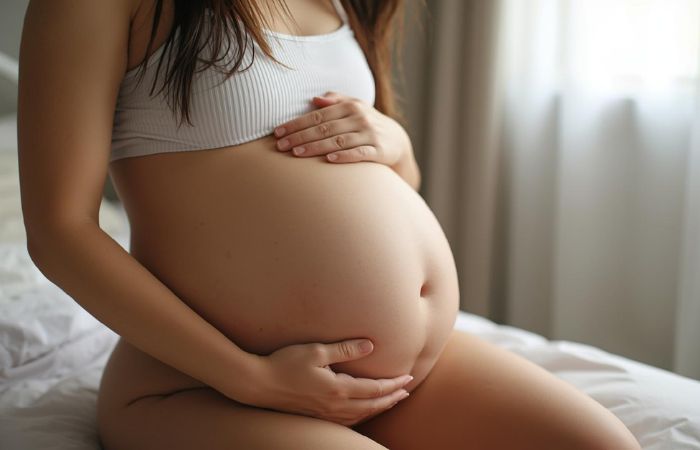
Pregnancy and childbirth can change your body in ways that take time to understand. Postpartum body recovery is the gradual process of healing, muscle re-engagement and tissue adaptation after pregnancy — and it typically unfolds over months, not weeks.

This guide is educational and does not replace professional medical advice. If you have persistent pain, bleeding, fever, worsening swelling, or urgent concerns, seek medical care promptly.

What Is Postpartum Body Recovery?

Postpartum body recovery refers to the physical adaptation process after pregnancy. It includes how your body gradually re-stabilises after months of stretching, hormonal shifts and changes in movement patterns.

For many women, this involves rebuilding core connection, restoring muscle tone and allowing skin and tissue to settle over time.

  • Muscle re-engagement: Reconnecting with your core, hips and pelvic region after pregnancy.
  • Tissue adaptation: Soft tissues and connective structures gradually adjust after stretching.
  • Skin changes: Elasticity and texture may improve gradually, at different speeds for different women.
  • Realistic timelines: Many postpartum changes evolve across months rather than “by the 6-week check”.

Common Body Changes After Pregnancy (What’s Normal)

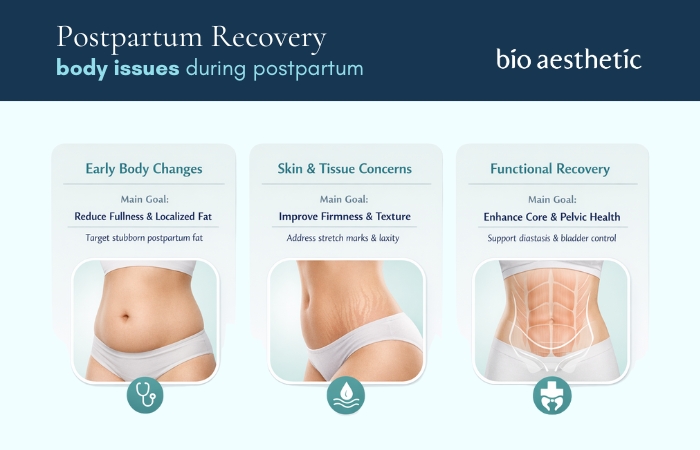
It’s common to notice changes in your belly, core strength, muscle tone and skin texture after delivery.

These changes can be frustrating — especially when you’re doing “all the right things” — but they often reflect normal postpartum physiology and the time it takes for muscles and tissues to re-adapt.

Abdominal Changes & Core Weakness

Abdominal Changes & Core Weakness

After pregnancy, many women notice a softer belly, reduced “core bracing”, or a feeling that the abdominal area doesn’t respond like it used to.

This can happen because muscles have been stretched and may initially have reduced activation — not simply because of fat.

  • Lower-belly softness that persists beyond the early postpartum weeks
  • Difficulty engaging the deep core during movement
  • A sense of “disconnection” between intention and muscle response
reduced muscle after childbirth

Reduced Muscle Tone After Childbirth

Even if you were active before pregnancy, postpartum muscles can feel less responsive at first.

This is common in the core, glutes and thighs, where pregnancy and postpartum routines can change how muscles fire and how consistently you can train.

  • Strength can feel “harder to rebuild” than expected
  • Muscles fatigue quickly even with familiar exercises
  • Progress may feel non-linear due to sleep, stress and routine changes
skin laxity and texture change

Skin Laxity & Texture Changes

Skin stretches significantly during pregnancy. After delivery, some women notice looseness or texture changes even if their weight stabilises.

This often reflects how elastic fibres and collagen remodel gradually over time.

  • Firmness may return slowly, and not always evenly across areas
  • Texture can feel different after prolonged stretching
  • Hydration, nutrition and routine can influence how skin feels day-to-day

Postpartum Recovery Treatments Options

Some women choose to explore non-invasive treatments as part of their postpartum recovery journey.

These options are offered as supportive tools and are typically considered alongside time, movement, and lifestyle recovery — not as replacements.

Postpartum concern Treatment offered How it may help (educational) Learn more
Core weakness or poor muscle engagement EMS Muscle Stimulation May help encourage more consistent muscle contraction in areas that feel difficult to activate
after pregnancy, especially when paired with progressive exercise.
EMS muscle stimulation
Reduced muscle tone after pregnancy Muscle Toning Treatments May support gradual strength rebuilding by targeting deeper muscle layers that can feel harder
to engage voluntarily during the postpartum period.
Muscle toning support
Belly softness or post-pregnancy contour changes Fat Freeze (Cryolipolysis) A non-invasive option sometimes explored to support areas of localised fat retention that persist
after pregnancy, once the body has stabilised.
Belly fat education hub
Deep or stubborn abdominal fullness Visceral Sculpt May be explored by women concerned about deeper abdominal fullness related to visceral fat,
as part of a broader lifestyle and recovery approach.
Visceral Sculpt
Skin laxity or reduced firmness Venus Legacy A non-invasive technology sometimes used to support skin firmness and tissue comfort during
the later stages of postpartum recovery.
Venus Legacy
Multiple body contour concerns after pregnancy Non-Invasive Body Contouring May help support overall contour refinement when multiple factors such as muscle tone,
fat distribution, and tissue changes are involved.
Body contouring education

This table is for educational purposes only. Treatment suitability varies between individuals and should be discussed during a personalised consultation.

What Supports Postpartum Body Recovery (Beyond Exercise)?

Exercise and nutrition are foundational, but postpartum progress can feel inconsistent — especially when sleep and routine are unpredictable.

Some women explore non-invasive support options to complement lifestyle recovery, focusing on muscle re-engagement and tissue support.

Muscle Re-Activation Support

Postpartum, it’s common to feel that your core “doesn’t switch on” the way it used to.

Muscle re-activation support is intended to complement training by helping women reconnect with specific muscle groups — particularly when early postpartum activation feels difficult.

  • Often considered when exercise feels “not enough” early on
  • May be used to support more consistent muscle engagement
  • Works best when paired with progressive movement habits

Skin & Tissue Support Technologies

If skin firmness and tissue feel remain a concern as your routine stabilises, some women explore non-invasive technologies as supportive add-ons.

The goal is comfort and tissue support — not aggressive “quick results”.

  • Often explored when skin feels slower to “settle” after pregnancy
  • Can complement hydration, nutrition and gradual strength-building
  • Approach should remain gentle and progressive

When Is It Reasonable to Explore Postpartum Body Support?

There’s no universal “correct” time. Many women consider supportive options when their daily routine becomes more
predictable and they feel ready to focus on recovery again.

  • After initial healing: Many women prefer to let the early postpartum phase pass before adding extra support.
  • When routine stabilises: Consistency matters more than intensity in postpartum recovery.
  • When goals are clear: Identify whether your focus is core connection, tone, skin feel, or all three.
  • When you want a gentle approach: Postpartum recovery support should never feel aggressive or rushed.
how to prevent belly fat

How Long Does Postpartum Body Recovery Take?

Postpartum recovery is best viewed in phases. Some changes improve quickly; others take longer. The timelines below are general education — your own recovery may be faster or slower, and that can still be normal.

Postpartum recovery phases (general guide)

  • 0–6 weeks: Initial healing, hormonal shifts, fatigue, routine disruption

  • 6–12 weeks: Early reconnection with movement patterns and basic strength

  • 3–6 months: Gradual strength improvement; belly and tone may still feel “behind”

  • 6–12 months: Tissue and muscle stabilisation for many women, but not always complete

  • 12+ months: Recovery “plateau” varies by individual, lifestyle and pregnancy history

Tip: If your main concern is belly shape/softness, start with the belly education hub first, then revisit the timeline to set realistic expectations:
https://bioaesthetic.com.sg/belly-fat/

how does venus legacy cellulite treatment works

Postpartum specialist to treat and

eliminate Belly Fat

Trusted by over 1000+ postpartum mothers out there.


Book your appointment now for a detailed consultation

Postpartum Recovery FAQ

how to reduce belly fat

Why does my belly still look pregnant months after delivery?

A “still pregnant” look can come from reduced core engagement, stretched tissues that take time to settle, and routine constraints that make training inconsistent. For many women, it’s not simply fat; it can also be posture, core connection and tissue adaptation. Start here for a clearer breakdown: https://bioaesthetic.com.sg/belly-fat/

How long does postpartum body recovery usually take?

Many women notice changes in phases: early healing (0–6 weeks), early muscle reconnection (6–12 weeks), gradual strength rebuilding (3–6 months), and stabilisation across 6–12 months. Some changes continue beyond a year. The biggest driver is consistency over time, not intensity.

Why does exercise feel less effective after childbirth?

Postpartum muscles can be harder to activate efficiently at first, and sleep/routine changes often reduce consistency. Many women progress better when they prioritise form, breath/core cues, and repeatable sessions rather than pushing intensity.

Is postpartum recovery different after a C-section?

It can be. Many women prefer a gentler progression and may take longer before returning to certain movements. If you’re unsure what’s appropriate for you, seek personalised advice from your clinician.

What can I focus on if I only have 10–15 minutes a day?

Choose small routines you can repeat often:

  • 2–3 minutes of breathing + gentle core engagement cues

  • 5–8 minutes of simple strength (glutes/hips/core)

  • 2–3 minutes of mobility/posture reset
    Consistency and quality usually matter more than duration.

Does breastfeeding affect postpartum body recovery?

Breastfeeding can coincide with hormonal changes that may influence how your body feels (energy, appetite, tissue feel). If you’re considering new support while breastfeeding, keep the approach gentle and conservative, and seek personalised guidance if uncertain.

What does “muscle re-activation” mean postpartum?

It means improving how consistently certain muscles contract and “switch on,” especially the deep core and glutes. It’s usually paired with progressive exercise and may be complemented by supportive options.

Can non-invasive support help with postpartum body recovery?

Some women explore non-invasive options as add-ons to lifestyle recovery, typically to support muscle engagement or tissue feel while building consistent habits. It’s best approached as part of a gradual plan, not a quick fix. Related: https://bioaesthetic.com.sg/venus-legacy/

Why does my lower belly stay soft even when my weight is stable?

Lower-belly softness can reflect core activation, posture, muscle tone and how stretched tissues are settling. Weight stability doesn’t always equal tissue stability.

Is there a “too late” point to start postpartum body recovery?

No. Many women start months or years later once life becomes more stable. A steady, realistic approach can still be meaningful at any stage.

What should I avoid if I want a postpartum-safe approach?

Avoid rushed “fast results” plans and overly aggressive progression. Prioritise gentle progression, repeatable routines and comfort. If you have pain or medical concerns, seek medical advice before increasing intensity.

Do you have more questions?

* Disclaimer: Results may vary among individuals. The information, including but not limited to, text, graphics, images and other material, contained on this website is for educational purposes only. The content is not intended in any way as a substitute for professional medical advice, diagnosis or treatment. Always seek the advice of your physician or other qualified healthcare providers with any questions you may have regarding a medical condition or treatment and before undertaking a new health care regimen, and never disregard professional medical advice or delay in seeking it because of something you have read on this website.

Our Locations

Orchard Branch

Palais Renaissance,
390 Orchard Road #03-01 Singapore 238871
Call Us: +65 6333 4566 
Whatsapp Us

Tampines Branch

Income @ Tampines Junction
300 Tampines Avenue 5 #04-05 Singapore 529653

Call Us: +65 6782 2777
Whatsapp Us

LASER CLINIC Logo white compressed
Aesthetic Clinic Singapore
We are part of the Theresa Holdings group of healthcare brands
 
Terms of Use
Contact Us
Refund & Returns Policy
Privacy Policy
 

Keep in touch with us!

Join our mailing list to stay up-to-date with all of our news and promotions!

    Prices indicated may be subject to change.

    Price is final at the clinic.

    Please check with the medical spa for the latest pricing.

    Price quoted on website, unless specified, is subjected to prevailing government goods and services taxes.