What Supports Postpartum Body Recovery (Beyond Exercise)?
Exercise matters, but postpartum recovery is rarely driven by exercise alone.
Many women progress best with a combination of functional movement, pelvic floor and core awareness, nutrition and rest, and (for some) non-invasive supportive options that complement a gradual routine.
1) Functional Movement & Posture (Start Gentle, Build Consistency)
Early postpartum, a gentle and repeatable routine is often more helpful than intense workouts. Many women start with
walking, light strength work, and posture awareness — then build progressively as energy and routine stabilise.
- Walking: simple, repeatable, and easier to sustain with a newborn schedule
- Light strength work: helps rebuild stability in the hips, glutes, and core over time
- Posture cues: small changes in alignment can improve how the core engages during daily activities
Related reading:
Muscle toning support
2) Pelvic Floor & Core Connection (Kegels, Breath & Control)
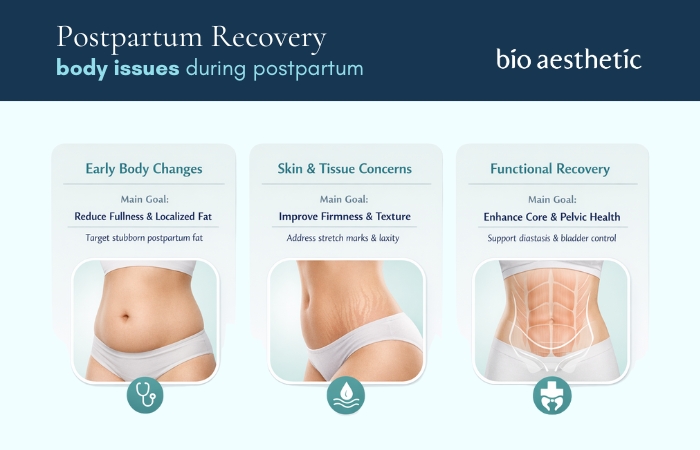
The pelvic floor and deep core work together for stability. After pregnancy, some women notice reduced control, heaviness, or urinary leakage during coughing, sneezing, or exercise.
Building awareness and control can be a key part of functional recovery.
- Kegels: commonly used to support pelvic floor control when done consistently and correctly
- Breathing and bracing: helps reconnect the deep core gently without rushing intensity
- Daily “micro-practice”: short, repeatable sessions often work better than occasional long workouts
If symptoms feel persistent or disruptive, personalised assessment can be helpful.
3) Postnatal Pilates / Yoga (Guided, Low-Impact Rebuilding)
Postnatal Pilates and yoga are popular because they emphasise controlled movement, breathing, and alignment.
Many women use them to rebuild core coordination and body awareness gradually — especially when returning to higher-impact exercise feels too soon.
- Supports controlled movement patterns and gentle strengthening
- Can improve body awareness and reduce “rushing” the recovery process
- Often complements walking and simple strength routines
4) Nutrition, Hydration, Rest & Pacing (Often Overlooked)
Postpartum recovery is influenced by everyday habits. Adequate protein and nutrient intake may support muscle and tissue
repair, hydration supports general wellbeing, and rest (even in short bursts) can help you sustain a routine without burnout.
- Protein + balanced meals: supports recovery and day-to-day energy
- Hydration: supports tissue health and overall wellbeing
- Pacing: steady habits often beat all-or-nothing “reset” plans postpartum
Many women in Singapore follow confinement diets. While practices vary, prioritising nourishment over restriction is generally more supportive during recovery.
5) Non-Invasive Support Options (As Add-Ons, Not Replacements)
If you’ve rebuilt consistent habits but feel progress is slow, some women explore non-invasive options as supportive add-ons. These are typically used to complement lifestyle recovery, not replace it.
- For muscle engagement: supportive options that encourage more consistent contraction may be explored alongside exercise
- For tissue/skin feel: some women explore gentle tissue-support options later in recovery
- For body contour concerns: approaches may vary depending on whether the priority is fat, tone, or skin