TL;DR
- A postpartum belly can come from fat, muscle changes, skin laxity, or a combination.
- Early softness (first 3–6 months) is often part of natural recovery.
- Persistent protrusion can sometimes relate to core weakness or diastasis recti.
- Weight loss alone may not address muscle separation or loose skin.
- If you’re plateaued at 6–12 months, a structured plan can help you choose the right next steps.
What Happens to the Belly During Pregnancy?
Pregnancy affects the abdomen in three main layers, and each layer recovers differently after childbirth.
Fat layer
During pregnancy, hormonal changes increase fat storage, particularly around the abdomen. This acts as an energy reserve to support pregnancy and breastfeeding. After delivery, this fat does not always disappear automatically, even if overall body weight decreases.
Muscle layer
As the uterus expands, the abdominal muscles stretch and thin. In some women, the muscles separate along the midline, a pattern often referred to as diastasis recti. Muscle recovery is often slow and may be incomplete without targeted reactivation.
Skin layer
The skin stretches rapidly during pregnancy. This can reduce elasticity, leading to loose or crepey skin after delivery. Stretch marks may also appear, depending on genetics and skin resilience.
Key point: Weight loss alone does not address muscle separation or skin laxity.
What Is Considered “Normal” Postpartum Belly?
Typical recovery timeline
| Time after delivery | What’s common |
|---|---|
| 0–3 months | Soft belly, bloating, weak core engagement, fluid retention. |
| 3–6 months | Some fat reduction may occur, but muscle tone often remains reduced. |
| 6–12 months | Progress may slow or plateau for many women. |
| 12+ months | Persistent belly changes become clearer and are less likely to resolve on their own. |
Normal changes that may improve naturally
The following are often part of natural postpartum recovery:
- Mild lower abdominal fat
- Temporary bloating
- Reduced muscle tone
- Mild skin looseness
These may improve with time, sleep recovery, nutrition, and a gradual return to activity.
When Postpartum Belly Changes Persist
Some postpartum belly concerns do not fully resolve, even with consistent exercise and weight loss. Common persistent issues include:
- Stubborn lower abdominal fat
- Diastasis recti that remains after months
- Loose or crepey abdominal skin
- A belly that protrudes despite being at a healthy weight
- Poor core stability or posture
These are often structural or physiological changes rather than lifestyle failures.
Belly Fat vs Muscle Separation: Why They Feel Different
Distinguishing between fat-related changes and muscle-related changes helps you set realistic expectations.
Belly fat
- Often feels soft and pinchable
- May fluctuate with weight changes
- Commonly sits lower on the abdomen postpartum
Muscle separation (diastasis recti)
- Abdomen may push outward when standing or engaging the core
- Some women notice a ridge or “doming” along the midline
- Belly may look flatter lying down but protrude when upright
Many women experience a combination of both fat accumulation and muscle separation.
What Can Be Treated — and What Should Be Left Alone?
Changes that often respond to structured postpartum care
The following issues may benefit from guided postpartum recovery approaches:
- Persistent abdominal fat pockets
- Weak or poorly activated core muscles
- Skin laxity after pregnancy-related stretching
- Belly protrusion linked to posture or muscle weakness
Changes that may not require intervention
Some changes may improve naturally and don’t necessarily require treatment:
- Early postpartum softness within the first six months
- Mild bloating
- Temporary fluid retention
If you’re unsure, a proper postpartum assessment helps distinguish between the two.
Why “Just Exercise” Isn’t Always Enough
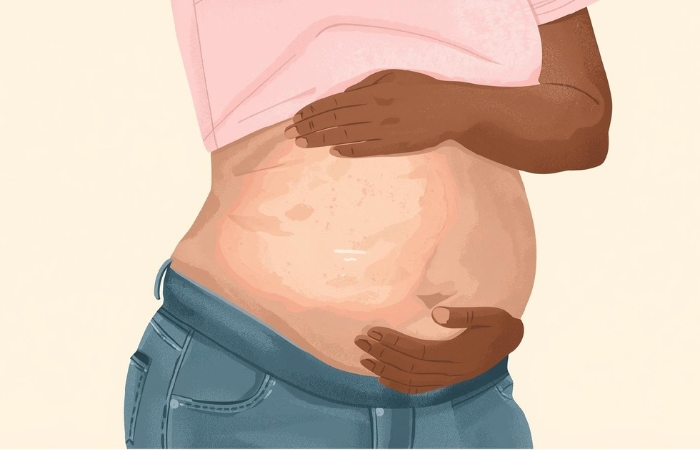
Many postpartum women struggle to see results despite regular workouts. Common reasons include:
- Limited time and recovery capacity after childbirth
- Avoiding core work due to fear of worsening separation
- Doing exercises that increase intra-abdominal pressure and strain weakened muscles
Without understanding which abdominal layer is contributing to the belly shape, effort may not translate into visible improvement.
A Smarter Way to Think About Postpartum Belly Recovery
Instead of focusing only on losing weight or flattening the stomach, it helps to ask:
- Is this mainly fat, muscle weakness, or skin laxity?
- Has my body reached a natural plateau?
- Am I strengthening the core safely or unintentionally stressing it?
Postpartum recovery is often more effective when approached in phases rather than rushed.
When to Explore Guided Postpartum Recovery
You may consider structured postpartum recovery support if:
- You are six months or more postpartum with little change
- You feel persistent core weakness or instability
- Your belly shape has not improved despite weight loss
- You have had multiple pregnancies
For a broader overview of postpartum recovery considerations and pathways, refer to:
Postpartum Body Recovery in Singapore.
Contextual Notes on Supportive Approaches
Some postpartum recovery frameworks may include core reactivation support or technologies aimed at improving muscle engagement or skin quality. These are typically used as adjuncts to lifestyle recovery rather than as standalone solutions.
If you’d like to understand the difference between abdominal fat patterns and how they behave over time, you can also read your belly fat pillar: post-pregnancy belly fat.
Final Takeaway
A postpartum belly is common and does not reflect a lack of effort or discipline.
Some changes are part of natural recovery, while others may persist due to deeper structural shifts.
Understanding the underlying cause helps women make informed, realistic decisions about their postpartum recovery journey.
The goal is gradual restoration, not rushing the body before it is ready.
Frequently Asked Questions About Postpartum Belly
Is it normal to still have a belly months after pregnancy?
Yes. Many women still have a soft or protruding belly for several months after delivery. This can be due to hormonal fat retention, weakened abdominal muscles, or stretched skin. For some women, these changes improve naturally over time, while others may notice a plateau after six to twelve months.
How long does it take for a postpartum belly to go down?
There is no fixed timeline. Some women notice gradual improvement within three to six months, while others may take a year or longer. If there is little change after twelve months, the belly shape may be related to muscle separation, posture, or persistent fat distribution rather than weight alone.
Why does my belly still look pregnant even though I’ve lost weight?
This often happens when the abdominal muscles remain weak or separated. In these cases, the belly may protrude outward even at a healthy weight. Skin laxity and postural changes can also contribute to this appearance.
Is postpartum belly fat the same as diastasis recti?
No. Postpartum belly fat feels soft and pinchable, while diastasis recti is related to a gap or weakness in the abdominal muscles. Many women experience both, which is why exercise or weight loss alone may not fully change the belly shape.
Can exercise make a postpartum belly worse?
Certain exercises can worsen core strain if performed too early or incorrectly, especially when muscle separation is present. High-pressure movements such as aggressive crunches or planks may increase abdominal bulging instead of improving it.
Should I wait before doing anything about my postpartum belly?
In the early months after childbirth, giving the body time to recover is often appropriate. If you are beyond six months postpartum and notice little improvement, it may be helpful to reassess what is contributing to your belly shape rather than continuing the same routine.
Does a postpartum belly mean I did something wrong?
No. A postpartum belly reflects how the body adapts to pregnancy and childbirth. Genetics, number of pregnancies, delivery method, and recovery pace all play a role. It is not a sign of failure or lack of effort.