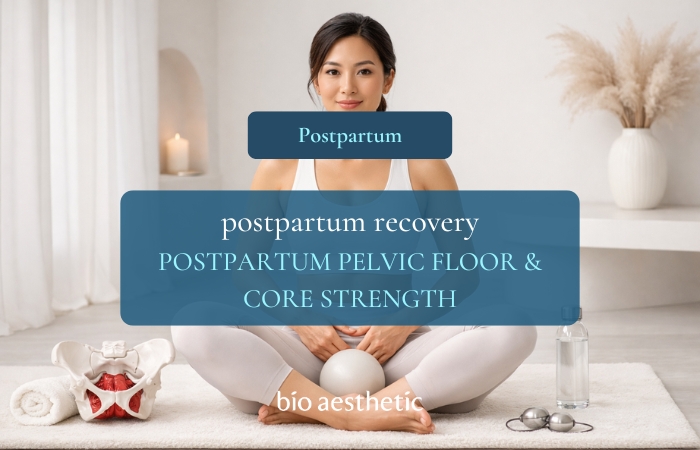
TL;DR
- The pelvic floor and deep core work as one support system after pregnancy.
- Mild symptoms early postpartum can be normal as the body heals.
- If symptoms persist beyond 6–12 months, recovery may need a more targeted approach.
- Kegels can help, but coordination with breathing and posture matters.
- A structured postpartum plan can clarify what’s normal vs what’s worth addressing.
What Is the Pelvic Floor — and Why It Matters After Pregnancy
The pelvic floor is a group of muscles at the base of the pelvis that support the bladder, uterus, and bowel.
During pregnancy and childbirth, these muscles stretch significantly. Vaginal delivery, prolonged pushing, assisted delivery, and even pregnancy itself can affect pelvic floor strength and coordination.
When the pelvic floor is weakened, symptoms may extend beyond the pelvis and influence how the entire core functions.
Common signs of postpartum pelvic floor weakness
- Leaking urine when coughing, sneezing, or exercising
- A feeling of heaviness or pressure in the pelvic area
- Difficulty engaging core muscles
- Reduced confidence during movement or exercise
How the Core and Pelvic Floor Work Together
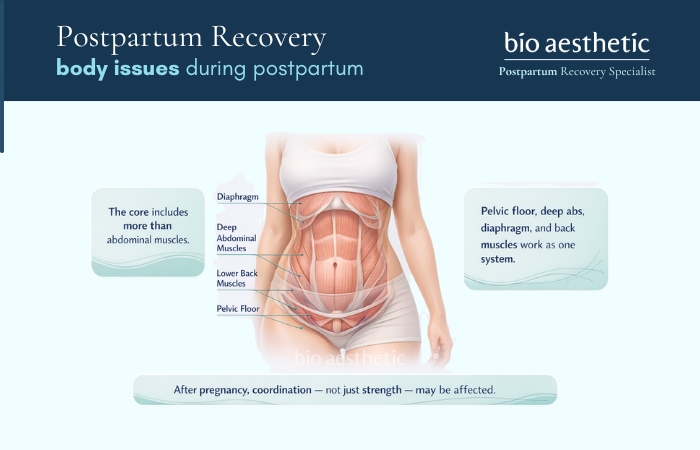
The core is not limited to the abdominal muscles alone. It includes the pelvic floor, deep abdominal muscles, the diaphragm, and lower back muscles.
These components work together to stabilise the body during daily movement.
After pregnancy, this system may lose coordination. Even if abdominal strength improves, unresolved pelvic floor weakness can limit overall recovery and contribute to feelings of instability or discomfort.
What Is Considered Normal Postpartum Recovery?
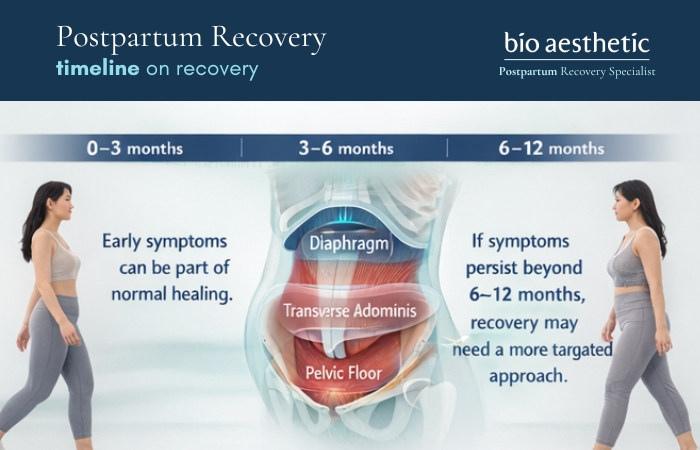
Recovery happens in phases, and expectations should change over time. Early postpartum symptoms are often part of normal healing, while persistent symptoms may indicate incomplete recovery.
Postpartum pelvic floor & core recovery timeline
| Postpartum phase | What’s commonly experienced |
|---|---|
| 0–3 months | Pelvic floor fatigue, reduced core awareness, occasional leakage, movement caution. |
| 3–6 months | Gradual improvement in bladder control and core engagement for many women. |
| 6–12 months | Recovery may plateau; persistent weakness becomes more noticeable. |
| 12+ months | Symptoms that remain are less likely to resolve without targeted strategies. |
Signs Pelvic Floor or Core Recovery May Be Incomplete
Some women continue to experience symptoms well after early postpartum healing. Common signs include:
- Ongoing urinary leakage months after delivery
- Difficulty activating core muscles despite regular exercise
- Lower back discomfort linked to posture or movement
- A feeling of instability during daily activities
These signs are common and do not reflect a lack of effort or discipline. They reflect how pregnancy can affect muscle coordination and load.
Why Kegels Alone May Not Be Enough for Some Women
Kegel exercises are commonly recommended after childbirth, but not all women find them effective on their own.
Many are unsure whether they are activating the correct muscles, while others may over-tighten the pelvic floor without proper coordination with breathing and deep core engagement.
In some cases, focusing only on voluntary contractions does not fully restore strength or awareness, especially when muscle signalling is weak or fatigue sets in.
Other ways pelvic floor and core muscles may be supported
In structured postpartum recovery programmes, additional approaches may be considered to help stimulate muscle contractions and improve neuromuscular awareness.
One example is magnetic muscle toning, which uses electromagnetic stimulation to trigger involuntary muscle contractions.
This type of stimulation may be used to support women who struggle to activate their pelvic floor or deep core muscles voluntarily.
These approaches are typically positioned as adjuncts to recovery — not replacements for natural healing, proper movement patterns, or gradual rehabilitation.
A More Balanced View of Postpartum Core Recovery
Postpartum recovery is not about pushing intensity early. It focuses on restoring muscle awareness, coordination, and gradual strength.
This often includes:
- Learning how to engage deep core muscles properly
- Improving breathing patterns
- Supporting posture and movement mechanics
- Allowing adequate recovery time between phases
A phased approach tends to be more sustainable and safer than rushing into high-intensity workouts.
When to Consider Guided Postpartum Recovery
You may consider structured postpartum recovery support if:
- You are more than six months postpartum with persistent symptoms
- Pelvic floor weakness affects daily activities or confidence
- You feel disconnected from your core during movement
- You have had multiple pregnancies
For a broader overview of how pelvic floor and core recovery fits into a complete postpartum plan, refer to:
Postpartum Body Recovery in Singapore
Contextual Notes on Supportive Approaches
Some postpartum recovery frameworks include guided core reactivation or muscle engagement support.
These approaches are typically used as adjuncts to lifestyle recovery rather than replacements for natural healing.
They are intended to support awareness, coordination, and confidence during recovery — not to rush results.
Final Takeaway
Pelvic floor and core weakness after pregnancy is common and often under-recognised.
Recovery is not just about exercise intensity, but about restoring coordination, stability, and confidence in movement.
Understanding what is normal — and when additional support may help — allows women to make informed and realistic decisions during postpartum recovery.
Frequently Asked Questions About Postpartum Pelvic Floor & Core Strength
Is pelvic floor weakness normal after pregnancy?
Yes. Pelvic floor muscles stretch significantly during pregnancy and childbirth. Temporary weakness is common and often improves with time and recovery.
How long does pelvic floor recovery take after childbirth?
There is no fixed timeline. Some women notice improvement within a few months, while others experience symptoms for longer, especially after multiple pregnancies or more complex deliveries.
Can pelvic floor weakness affect my belly shape?
Yes. Weak pelvic floor and deep core muscles can contribute to poor posture and abdominal protrusion, even if overall body weight is low.
Are Kegel exercises enough for postpartum recovery?
Kegels can help, but they are not always sufficient on their own. Coordination with breathing, posture, and deep core engagement is equally important.
When should I seek help for pelvic floor issues postpartum?
If symptoms persist beyond six months or interfere with daily activities or confidence, it may be helpful to explore guided postpartum recovery options.